
Tennis Elbow and Padel Elbow: 8 Myths Every Racquet Sport Player Should Stop Believing
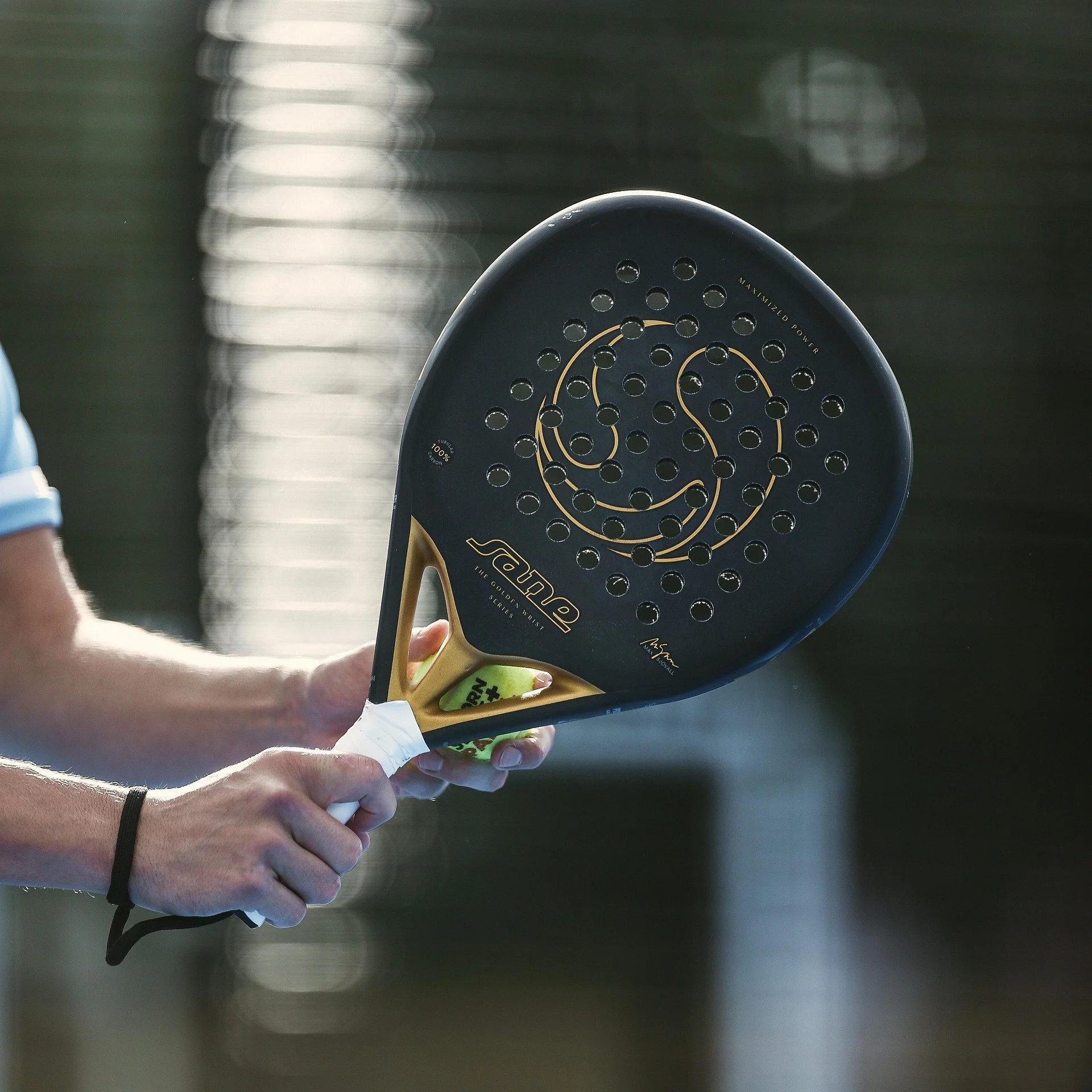
Tennis elbow is one of the most common causes of elbow pain, yet much of the advice surrounding it is outdated or simply incorrect.
Despite its name, many people who develop tennis elbow don’t play tennis at all. The condition is common in workers, gym-goers, and increasingly in people playing padel, one of the fastest growing sports in the world.
As thousands of new players pick up racquet sports every year, elbow pain is becoming increasingly common.
In this article we’ll look at what modern research actually tells us about tennis and padel elbow, what causes it, and how it can be treated effectively.
If you’re looking for tennis elbow treatment in Winchester, understanding the real causes of the condition is the first step toward recovery.
What Is Tennis (or Padel) Elbow?
Tennis elbow is the common name for lateral epicondylitis, a painful condition affecting the outside of the elbow.
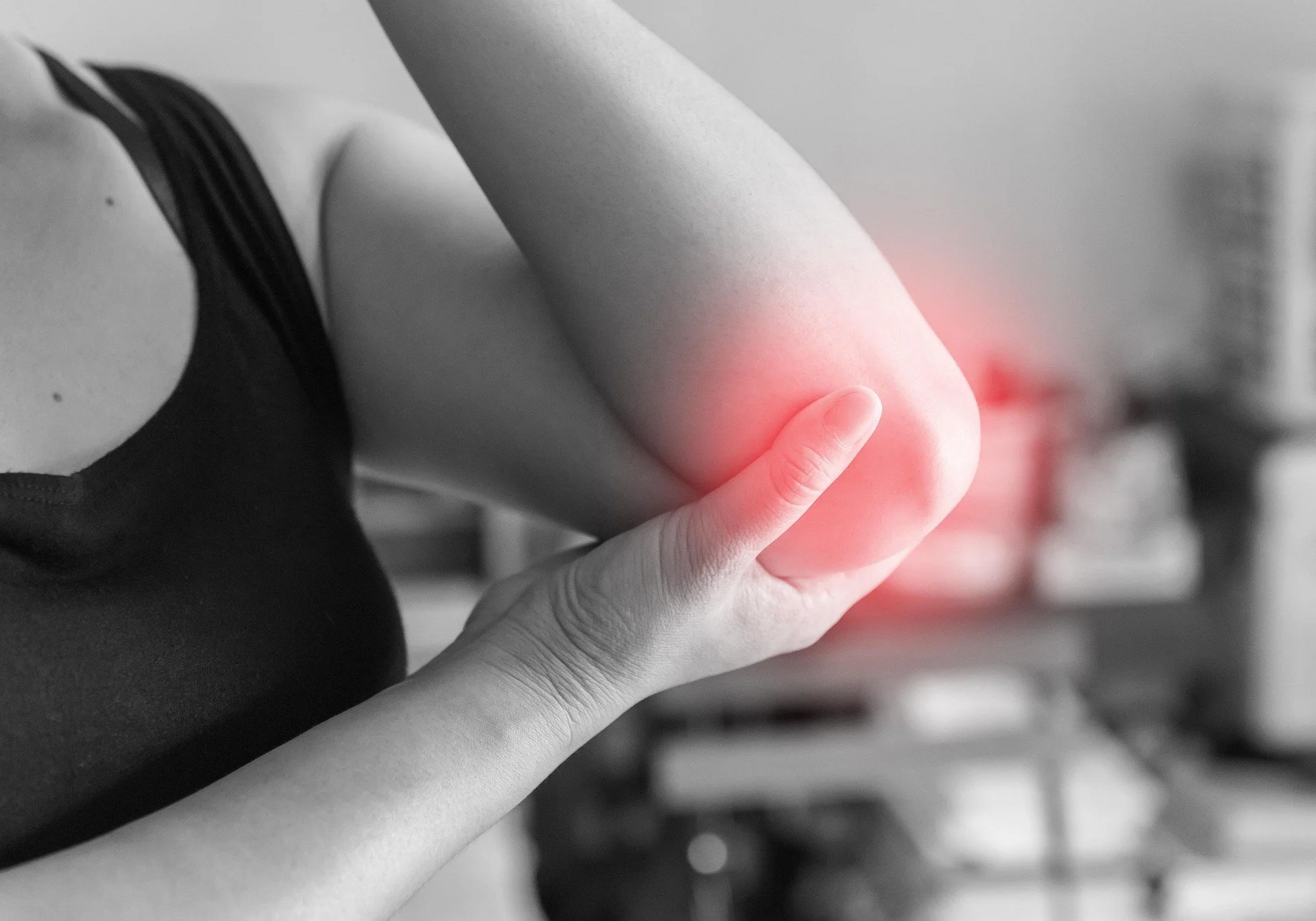
Tennis Elbow pain appears on the outside of the elbow.
It develops when the forearm extensor muscles — particularly the extensor carpi radialis brevis tendon — become overloaded where they attach to the elbow.
Typical symptoms include:
Pain on the outside of the elbow
Pain when gripping objects
Reduced grip strength
Pain when lifting, pouring, or shaking hands
Although symptoms can be frustrating, the outlook is usually good.
Research suggests most cases improve within 6–12 months with appropriate management and rehabilitation.
Before discussing treatment, it’s helpful to address some common myths.
Myth 1: Tennis Elbow Is an Inflammatory Condition
For many years tennis elbow was thought to be primarily an inflammatory problem.
Modern research has shown that this is usually not the case.
Instead, the condition is now understood as a tendinopathy, meaning the tendon develops microscopic degeneration due to repeated overload.
This explains why treatments aimed purely at reducing inflammation often fail to solve the underlying problem.
The key issue is usually tendon capacity versus tendon load.
Myth 2: Steroid Injections Fix the Problem
Steroid injections are widely used because they can provide rapid pain relief.
However, research has shown that these benefits are often short-lived.
A well-known clinical trial led by researcher Nynke Smidt found that while injections may help initially, patients often have higher recurrence rates and poorer outcomes in the longer term compared with physiotherapy or a wait-and-see approach.
This is why many clinicians now consider injections a short-term pain relief option rather than a long-term solution.
Myth 3: The Best Treatment Is Complete Rest
Many people assume the elbow simply needs rest.
In reality, complete rest may slow recovery.
Research into tendinopathy rehabilitation shows that tendons respond best to progressive loading.
Exercise programmes designed to strengthen the forearm muscles can improve both pain and function.
Effective rehabilitation usually includes:
gradual strengthening exercises
controlled loading of the forearm muscles
gradual return to activity
The goal is not to eliminate load, but to increase the tendon’s tolerance to load.
Myth 4: Only Tennis Players Get Tennis Elbow
Despite the name, most people who develop tennis elbow don’t play tennis.
Common causes include:
manual work
repetitive gripping
heavy computer mouse use
DIY and gardening
However, racquet sports are a common trigger — particularly when players increase their activity suddenly.
This is becoming increasingly relevant as padel grows rapidly in popularity across the UK.
Many new padel players are enthusiastic beginners who play several times per week without giving their bodies time to adapt.
Myth 5: Lighter Rackets Prevent Elbow Problems
Many players assume a lighter racket is easier on the elbow.
The reality is more complicated.
Very light rackets can sometimes increase vibration and shock transmitted to the arm.
A slightly heavier racket may allow the momentum of the racket to carry through the ball more smoothly, potentially reducing strain on the forearm muscles.
However, racket weight alone is rarely the main cause of elbow pain.
Technique and gripping behaviour are usually far more important.
Myth 6: Grip Size Doesn’t Matter
Grip size can influence how hard the forearm muscles must work during play.
A grip that is too small often causes players to squeeze the racket harder to stabilise it.
This increases activity in the forearm extensor muscles and may contribute to overload.
Most coaches recommend a grip size that allows about one finger’s width between the palm and fingertips when holding the racket.
Although the research evidence is limited, correct grip sizing is widely considered good practice.
Myth 7: How Hard You Grip the Racket Doesn’t Matter
One of the most common contributors to elbow pain in racquet sports is gripping too tightly.
When players hold the racket with constant tension, the forearm muscles remain under load throughout the entire swing.
Over time this can lead to repetitive strain at the elbow.
Efficient technique usually involves:
a relaxed grip during the swing
tightening the grip briefly at ball contact
allowing the racket to swing freely through the ball
Small changes in grip behaviour can significantly reduce stress on the elbow.
Myth 8: Technique Doesn’t Matter
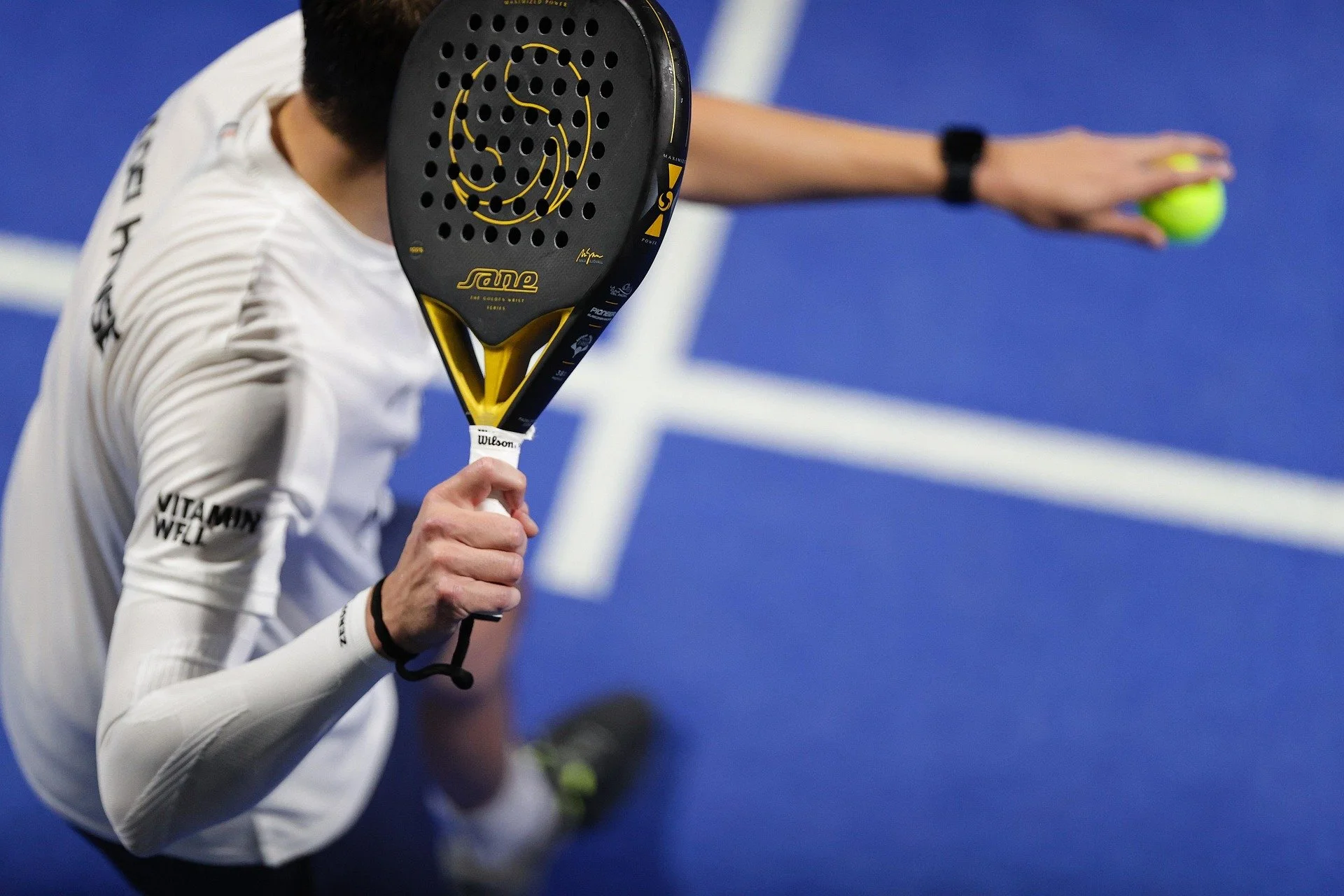
Technique is one of the most important factors in preventing elbow injuries.
In both tennis and padel, powerful strokes should come from the whole body, not just the arm.
Efficient movement uses a kinetic chain transferring energy from:
legs → trunk → shoulder → arm → racket
When this sequence breaks down, the forearm muscles absorb far more force than they should.
Common technical mistakes include:
late ball contact
excessive wrist extension at impact
relying too heavily on the arm instead of body rotation
Correcting these issues can dramatically reduce elbow stress.
Why Neuromuscular Control Matters
Another important factor is neurological control of the muscles of the arm and shoulder.
Efficient movement requires precise coordination between multiple muscle groups.
If this coordination is poor, smaller muscles such as the forearm extensors may become overloaded while compensating for weaknesses elsewhere.
Rehabilitation programmes often focus on restoring:
shoulder stability
forearm strength
coordinated movement patterns
efficient load transfer through the arm
These principles align with modern tendinopathy rehabilitation research led by clinicians such as Professor Bill Vicenzino.
Evidence-Based Treatment for Tennis and Padel Elbow
Modern treatment typically focuses on restoring function rather than simply reducing pain.
Effective management may include:
Load management
Reducing aggravating activities temporarily while maintaining general activity.
Progressive strengthening
Gradually strengthening the forearm muscles to increase tendon capacity.
Manual therapy
Some physiotherapy techniques, including mobilisation combined with exercise, may improve short-term pain and function.
Technique and equipment advice
Adjusting grip behaviour, technique, and equipment where necessary.
Gradual return to sport
Allowing the tendon time to adapt to increasing load.
Tennis and Padel Elbow Treatment in Winchester
At Winchester Spine Centre, we regularly help patients recover from elbow pain caused by racquet sports and repetitive strain.
Your assessment may include:
evaluation of elbow mechanics
assessment of shoulder and wrist function
grip strength testing
analysis of movement patterns
Treatment may include:
chiropractic joint mobilisation
soft tissue therapy
progressive rehabilitation exercises
advice on technique and load management
The aim is not just to reduce pain but to restore normal function and prevent the problem returning.
When Should You Seek Help?
Consider professional assessment if:
elbow pain lasts longer than a few weeks
gripping objects becomes painful
symptoms interfere with work or sport
the problem keeps recurring
Early treatment can prevent a minor problem becoming chronic.
Need Help With Tennis or Padel Elbow?
If elbow pain is limiting your sport or work, you can book an assessment with our chiropractors in Winchester.
With the right diagnosis, rehabilitation, and movement advice, most people can return to sport and normal activity.
Written by Mark Kennedy BSc (Chiropractic), DC, CCEP
Chiropractor at Winchester Spine Centre, Padel and Tennis player, intermittent sufferer of “Tennis Elbow”.
Mark Kennedy is a UK-registered chiropractor (General Chiropractic Council Reg; 00019) and a Certified McGill Method Practitioner with over 25 years of clinical experience treating back pain, neck pain, joint injuries, and chronic musculoskeletal conditions in Winchester.
This article is published by Winchester Spine Centre, a regulated chiropractic clinic based in Winchester, Hampshire.