
Shoulder Pain & Rotator Cuff Injuries in Winchester: Why You Still Hurt and What Your Body Is Really Telling You
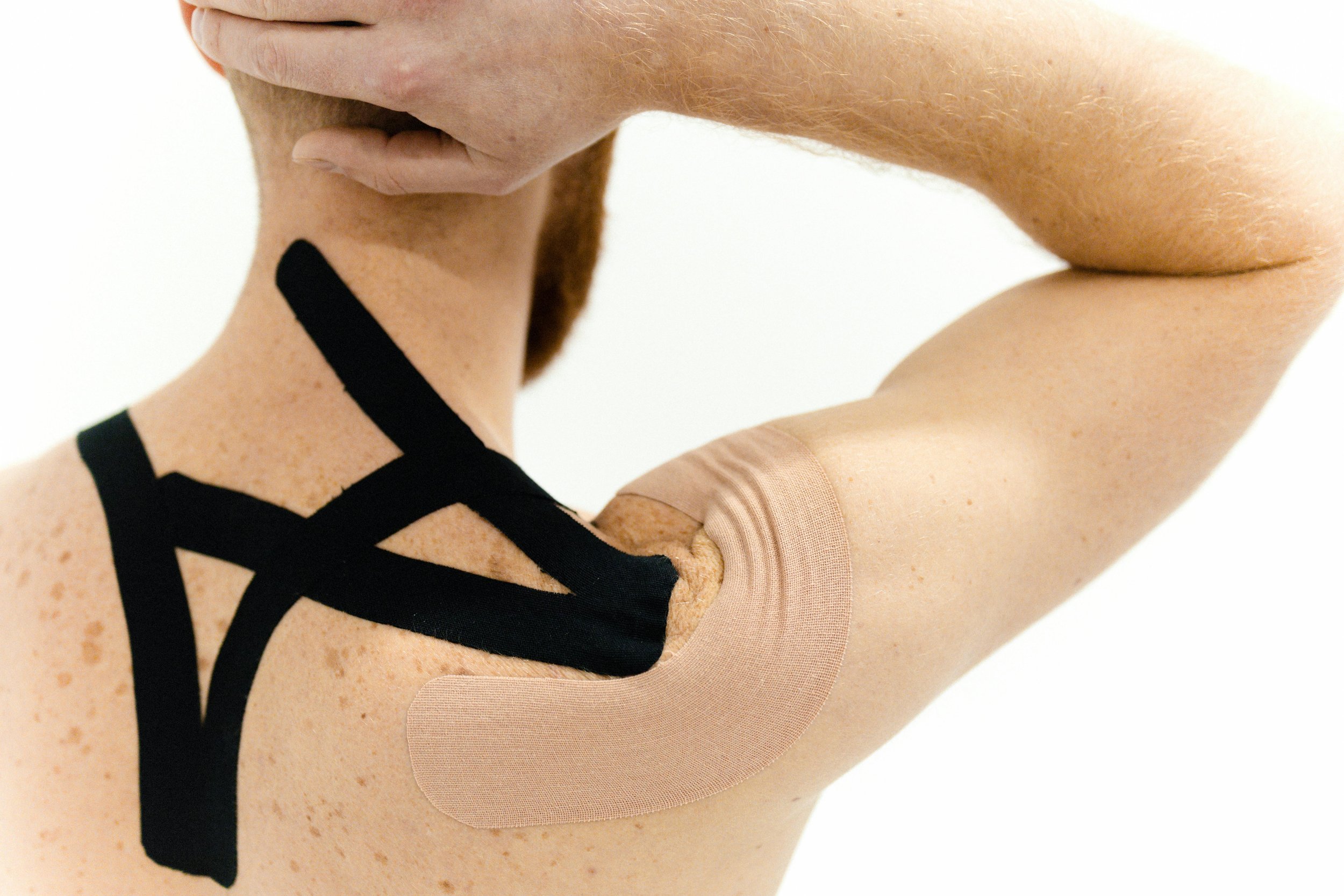
Shoulder Pain in Winchester: Why Does It Linger?
Shoulder pain is one of the most common problems I see here at Winchester Spine Centre — whether it’s from gym training, gardening, swimming or simply wear and tear that’s crept in over time.
Often the diagnosis is a rotator cuff injury.
But here’s what many people in Winchester discover after months (or years) of frustration:
Even when the scan shows “just” tendinopathy…
Even when rehab has been tried…
Even when injections have been given…
The pain can persist.
Why?
Because shoulder pain is rarely just about the tendon.
What Is the Rotator Cuff — And Why Does It Matter?
The rotator cuff consists of four small stabilising muscles that coordinate and centre the shoulder joint during movement.
When irritated or torn, you may notice:
Pain lifting your arm
Night pain
Weakness
Clicking or catching
Reduced mobility
But the most important role of the rotator cuff isn’t strength — it’s control.
And this is where things get interesting.
What the Latest Research Is Telling Us
Modern research has moved well beyond “there’s a tear, that’s the problem.”
1️⃣ Compensation Happens Quickly
Biomechanical studies show that when one rotator cuff muscle underperforms, other muscles — including the deltoid and even muscles on the opposite side — alter their activation patterns to compensate.
This protective strategy keeps you functioning… but it also changes how your shoulder loads.
Over time, those altered patterns can become the real driver of pain.
2️⃣ It’s a Neuromuscular Issue — Not Just Structural
Electromyography (EMG) research demonstrates that rotator cuff injuries create altered muscle firing sequences — particularly in the biceps and deltoid.
This reinforces something we see clinically:
Pain persists because the nervous system has adopted a new movement strategy.
And unless that strategy changes, the shoulder never truly settles.
3️⃣ Myofascial & Trigger Point Contributions
Recent meta-analyses highlight the role of trigger points and fascial tension in persistent shoulder pain.
The fascia of the chest, neck, thoracic spine, and even abdominal wall can influence shoulder mechanics.
In a busy, desk-based town like Winchester — where posture and sustained sitting are common — these patterns are incredibly relevant.
Why This Matters for Long-Term Shoulder Pain
Many people I see locally have done “the exercises.”
They’ve strengthened the cuff.
They’ve stretched.
They’ve rested.
Yet the pain returns.
Often this is because:
Certain muscles are under-recruiting
Others are overworking
Fascia is restricted
Movement sequencing is altered
In other words — the body has adapted around the injury.
Where Afferentlogy & Functional Muscle Testing Fit In
As a practitioner of Simon King’s Afferentlogy techniques, I assess the shoulder differently.
Rather than focusing solely on the site of pain, I examine:
✔ How your nervous system is recruiting muscles
✔ Whether stabilisers are properly engaged
✔ Compensation patterns across the kinetic chain
✔ Myofascial restrictions influencing movement
This is particularly relevant in longer-term shoulder pain where traditional approaches haven’t fully resolved symptoms.
It’s not about “pushing harder” with rehab.
It’s about identifying the hidden drivers of dysfunction.
A Common Winchester Scenario
A recreational tennis player from Harestock.
A rower from the Itchen.
A CrossFit enthusiast from Winnall.
Months of shoulder pain.
MRI shows tendinopathy.
Rehab helps — but doesn’t finish the job.
When we assess functionally, we often find:
Serratus anterior inhibition
Overactive upper trapezius
Thoracic restriction
Fascial tension through the anterior chain
Correct those patterns — and the shoulder begins to behave differently.
FAQ – Shoulder Pain in Winchester
Do all rotator cuff tears require surgery?
No. Many can be managed conservatively, especially when neuromuscular control and compensation patterns are addressed appropriately.
Why hasn’t my shoulder improved despite exercises?
If compensatory movement patterns remain, strengthening alone may reinforce dysfunction rather than resolve it.
Can fascia really affect my shoulder?
Yes. The fascial network connects the chest, neck, and trunk to the shoulder complex. Restrictions elsewhere can alter shoulder loading.
Is this approach suitable for long-standing injuries?
Often, yes. Particularly when pain has plateaued despite conventional care.
When to Seek Assessment
If your shoulder pain in Winchester:
Has lasted more than 6–8 weeks
Keeps returning
Wakes you at night
Limits sport or gym training
Has “settled but not resolved”
It may be time to assess function rather than just structure.
A Gentle Invitation
If you’re local to Winchester and feel like you’ve tried everything for your shoulder without complete resolution, a functional assessment may reveal what’s been missed.
At Winchester Spine Centre, we take a whole-system view — because shoulders don’t operate in isolation.
👉 Book an assessment and let’s explore what your shoulder is really telling you.
Written by Mark Kennedy BSc (Chiropractic), DC, CCEP
Chiropractor at Winchester Spine Centre
Mark Kennedy is a UK-registered chiropractor (General Chiropractic Council Reg; 00019) and a Certified McGill Method Practitioner with over 25 years of clinical experience treating back pain, neck pain, joint injuries, and chronic musculoskeletal conditions in Winchester.
This article is published by Winchester Spine Centre, a regulated chiropractic clinic based in Winchester, Hampshire.